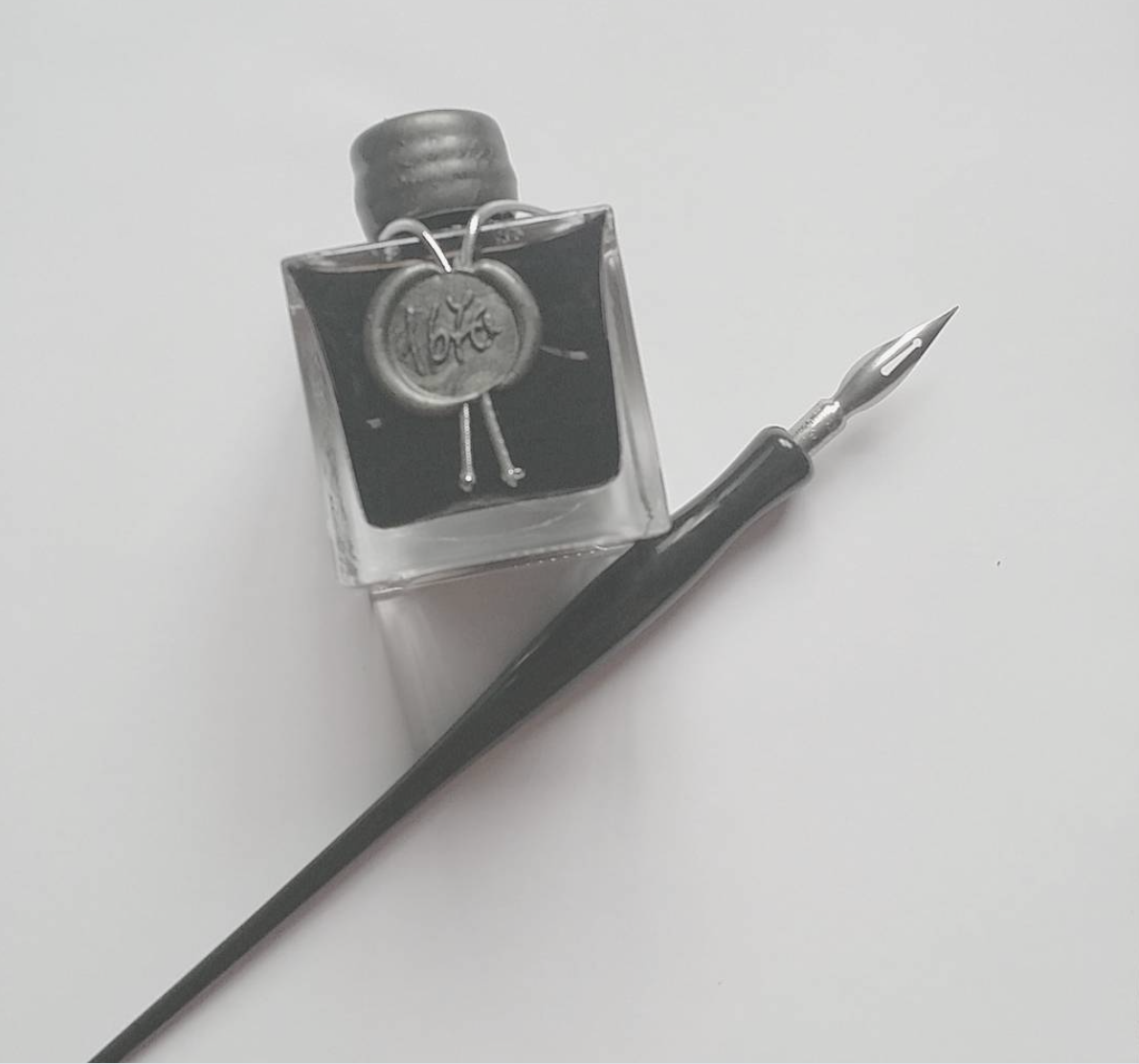
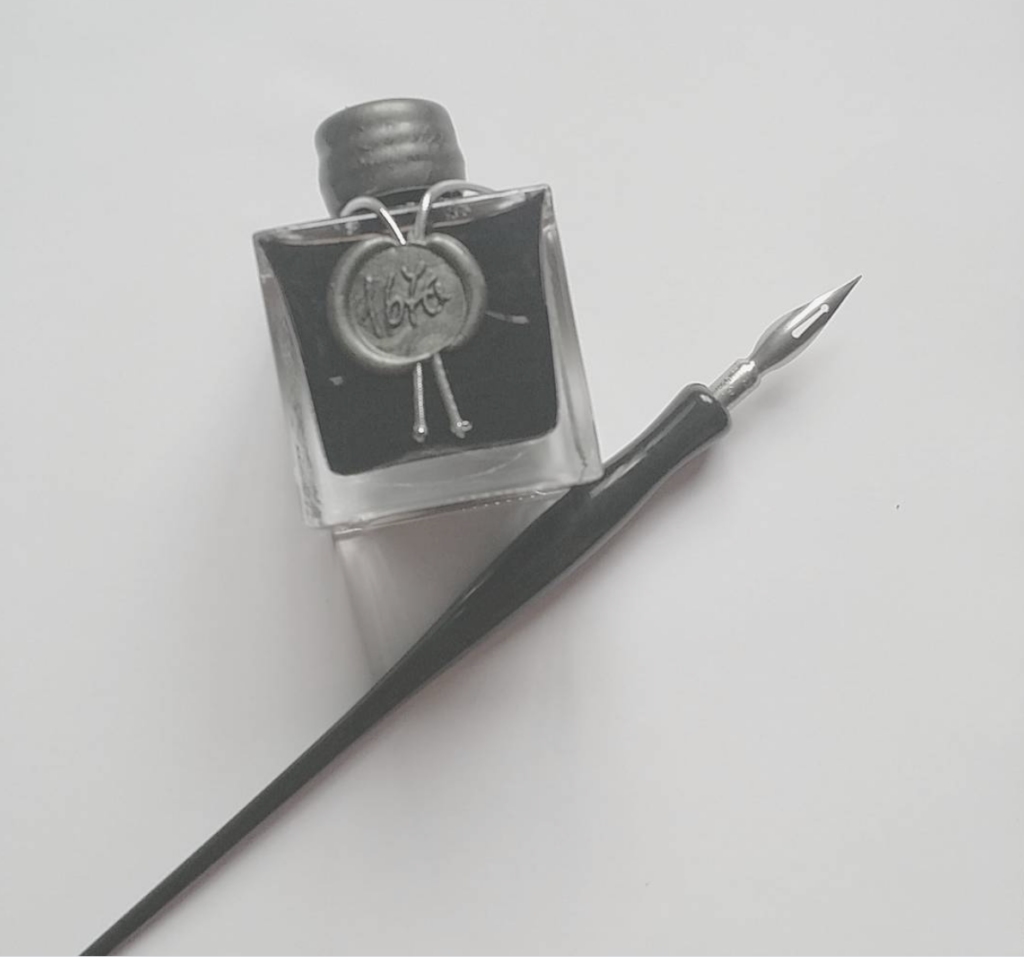
Writing with a fountain pen requires an open connection
to one’s own thoughts,
written out in a stream of ink
that coaxes continuity
by its very nature.
Some might say it was forced upon me. I prefer to call it synchronicity. Either way, it paved the way for a love of fountain pens that persists to this day.
Every year, as the summer months would fade into crisp autumn weather, I would look forward to back to school shopping with the tenacity of an athlete before a big game. The year I turned twelve, I found out I was accepted to a private school my older cousin was attending. Armed with the insider information that we would be required to write with a fountain pen, I scoured the advertisements looking for the mythical pen once carved from the feathers of birds. These writing instruments had fallen out of fashion over half a century ago. Gone were the pen stands and gilded inkwells of yesteryear. In their stead, our drawers were filled with one-time use roller ball pens, often with logos and phone numbers of local businesses. Their novelty always faded quickly, and I longed for something more – something that would match my love of the written word, something with gravitas (though I would never know then to describe it as such).
I started stalking the pen aisle of the nearest office supply store. Hidden on a bottom shelf, tucked almost imperceptibly under box-sets of Bics, was a wine-red box from Sheaffer with a clear cellophane cut-out on the cover, showcasing two pen barrels, three nibs, and a selection of coloured inks. What luck! I tucked it further back the shelf for safe-keeping and went to find my parents. For months I begged and begged for the “plume” set (the French word for fountain pen, reminiscent of its ancestral lineage), describing in detail where they could find it, and how useful it would be for my future education. Then, a few months later on Christmas day, I unwrapped a square shaped parcel, seated on a carpet the same colour as the prized box set. What joy!
I was soon to discover the difference between nib shapes and sizes, that all fountain pens were not created equal. The calligraphy beauties I so cherished were not, in fact, acceptable for the daily needs of note-taking and test-taking. There were strict pen and ink requirements for school – rounded tip fine nibs for our pens, and only blue ink for notes, tests and our devoirs. Searching for a fountain pen that fit these parameters would lead me to boutique stationery shops and flea markets selling novelty merchandise from overseas, where I would steadily add to my growing collection. With the rise in popularity of modern calligraphy, not only is access to fountain pens much easier, but there is such a variety that has entered both the mainstream and artisanal commerce – a veritable buffet of craftsmanship.
The fountain pen itself is layered in history. Through this tool we can imagine the writers who came before us, the creation of manuscripts and mathematical equations painstakingly copied out by candlelight, with ink pot, pen knife (aptly named for its original use) and blotting paper the necessary companions of the mighty quill. Though the mechanics of the fountain pen have been updated and simplified to facilitate its daily use in a modern world, something of the devoted effort it takes to write in ink remains.
In school, I was taught that writing with a fountain pen requires two things: reflection before putting ink down, and conviction once it was on the page. To this I say, yes and… an open connection to one’s own thoughts, written out in a stream of ink that coaxes continuity by its very nature. The writer is lured by the flow of ink to use the art of calligraphy (or, as I learned it, “lettres-attachées”) to keep thoughts spilling from mind to paper, barely lifting the point of the nib off the page. This romanticized vision of penning one’s thoughts without censure and without a tidy means of erasing the words on the page can inspire an honesty and a vulnerability in writing from the heart.
Over the years, I have collected dozens of fountain pens, decanted innumerable bottles of ink in a variety of colours, sheens, and drying times onto paper through the precision of metal nibs from fine to broad. I have learned about proper storage, cleaning and maintenance, and the patience required when thoughts are thwarted by an empty ink cartouche. I am still in the process of figuring out how to write with the dip pens I was gifted, and how to alter my technique based on an ink’s viscosity (it’s been a blotchy process). And when it all gets a little overwhelming, I pull out the original set of fountain pens I unwrapped over two decades ago, fill the reservoir with fresh ink, and channel the childlike sense of wonder that inspired this journey.
I hope you get the chance, at least once in your life, to glide the nib of a fountain pen across the smooth surface of a glossy page, to sign your name with a flourish, and to walk away proudly with ink stains on your fingers.
Calligraphically,
Katherine